Cache Invalidation (Why Making Things Fast Is Easy — Keeping It Correct Is Hard)
A first-principles explanation of cache invalidation, why it is hard, and how correctness quietly breaks in fast systems.
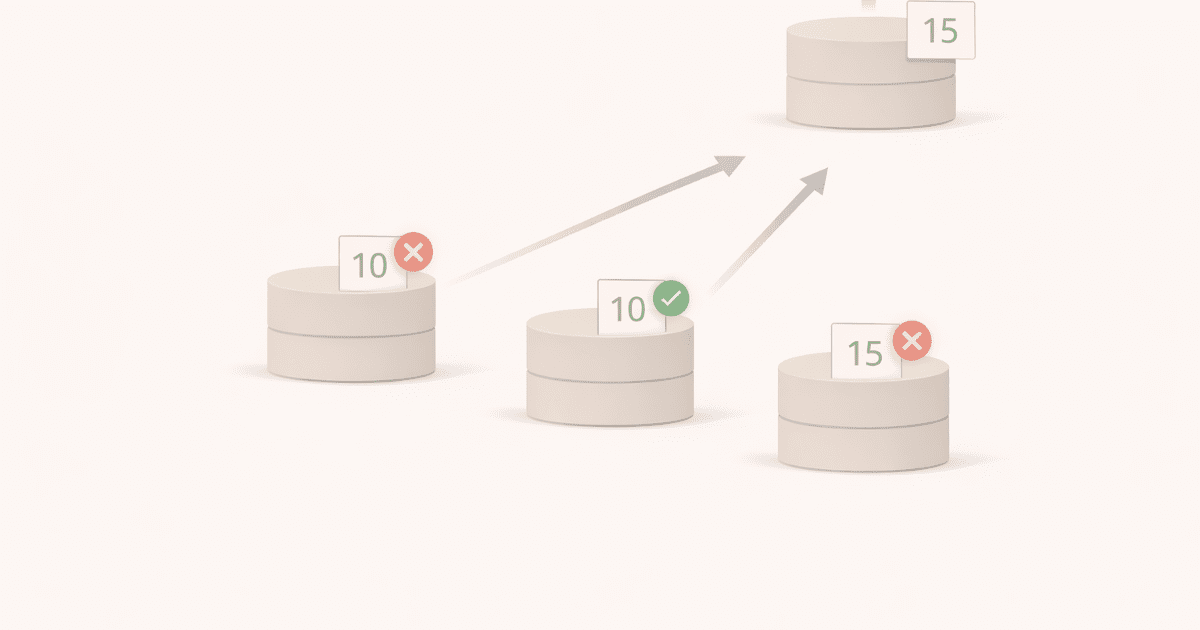
When a Fast System Starts Lying
Everything looks healthy.
- responses are instant
- servers are idle
- dashboards are green
Then someone reports:
“I updated my data… but I still see the old value.”
Nothing crashed.
Nothing timed out.
But the system is now wrong.
That moment is cache invalidation.
The Real Question Caching Introduces
Caching remembers answers.
Systems, however, change.
So the real system design question is not:
“Can we cache this?”
It’s:
“When should the system forget?”
That single question is why cache invalidation is hard.
A Simple Story: Updating a Notice Board
Imagine an office notice board.
A message is posted.
People read it.
Some remember it.
Later, the message is updated.
Unless everyone who remembered the old message is told to forget it,
different people will act on different truths.
That’s cache invalidation.
Not changing the source —
changing every memory of it.
Why Invalidation Is Fundamentally Difficult
Because cached data:
- exists in multiple places
- lives at different layers
- expires at different times
You’re not invalidating one cache.
You’re invalidating:
- browser caches
- CDN caches
- reverse proxy caches
- application-level caches
- database-level caches
And they don’t coordinate.
They just remember.
How Systems Usually Try to Forget
In practice, systems rely on a small set of strategies:
Time-based (TTL)
“Forget this after N seconds.”
Simple.
Predictable.
Often wrong for a while.
Event-based
“Forget this when data changes.”
More correct.
Much harder.
Easy to miss edge cases.
Manual busting
“Force forget now.”
Powerful.
Risky.
Often used during incidents.
None of these are perfect.
Each trades correctness for simplicity or safety.
⚠️ Common Trap
Trap: Believing TTL solves invalidation.
TTL doesn’t make data correct.
It only limits how long it can be wrong.
Short TTLs:
- reduce staleness
- increase load
Long TTLs:
- improve performance
- risk incorrect behavior
TTL is a compromise — not a solution.
A Failure Pattern You’ve Likely Seen
Many production issues are not outages.
They’re things like:
- old prices displayed
- revoked access still allowed
- deleted content still visible
The system responds fast.
But it responds with the past.
These bugs are dangerous because:
- monitoring often stays green
- users lose trust quietly
How This Connects to What We’ve Built So Far
Caching
Invalidation exists only because caching exists.
https://vivekmolkar.com/posts/caching/Stateless vs Stateful
Hidden state in caches makes correctness harder. https://vivekmolkar.com/posts/stateless-vs-stateful/
This is where performance optimizations collide with correctness.
Caching makes systems fast.
Invalidation decides whether they’re right.
🧪 Mini Exercise
Think about a cached response in your system.
- What event should invalidate it?
- How many layers remember this data?
- What happens if it stays wrong for 5 minutes?
If you can’t answer all three,
your cache is already a future bug.
What Comes Next
Cache invalidation reveals a deeper truth:
Different parts of a system don’t agree on reality at the same time.
Next: Consistency Models
Why “eventually correct” exists — and when it’s acceptable.