Databases vs Caches (Why Some Systems Decide — and Others Just Remember)
A first-principles explanation of databases vs caches, clarifying sources of truth, memory, and why confusing the two leads to fragile systems.
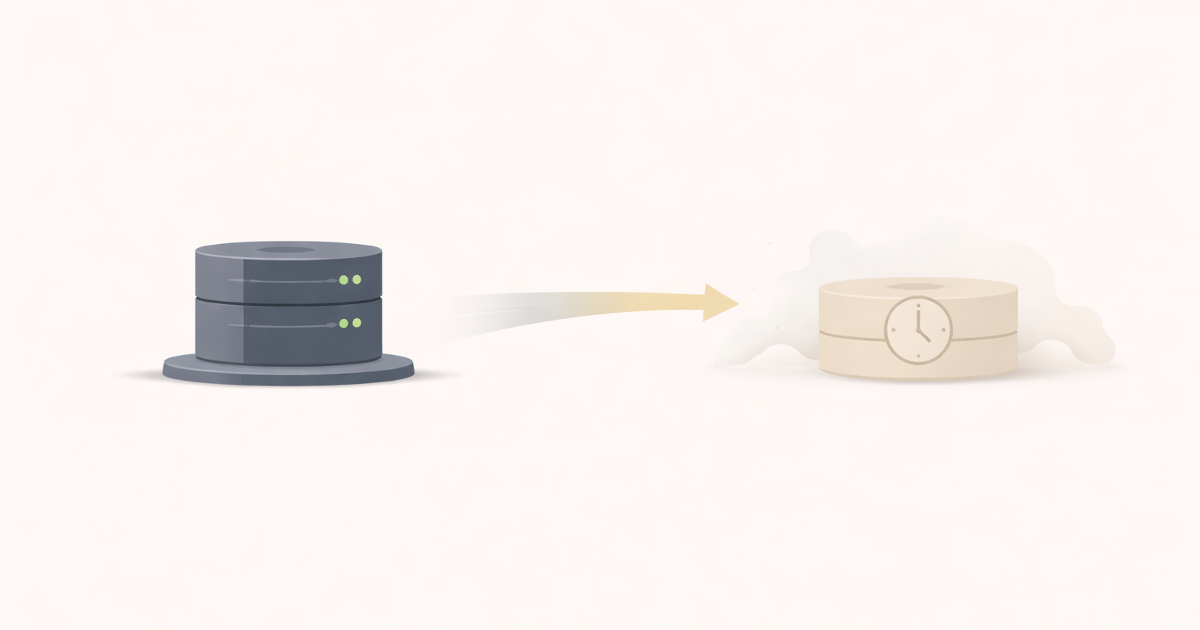
When Fast Starts Feeling Fragile
Your system is fast.
Pages load instantly.
APIs respond in milliseconds.
Then something strange happens.
Data disappears.
Values reset.
Information looks… unreliable.
Nothing crashed.
But something important was misunderstood.
You treated memory as truth.
The Core Distinction (No Jargon)
At a high level:
Databases decide.
Caches remember.
They serve different purposes.
Confusing them leads to systems that feel fast —
until they don’t feel correct.
What a Database Is Really For
A database exists to be the source of truth.
It is responsible for:
- durability (data survives crashes)
- correctness (rules are enforced)
- consistency (within defined guarantees)
When a decision must be final —
the database decides.
Everything else is optional.
What a Cache Is Really For
A cache exists to avoid work.
It is responsible for:
- speed
- reducing load
- absorbing bursts
Caches:
- can be cleared
- can be wrong temporarily
- can disappear without warning
They are helpful —
but not authoritative.
A Simple Story: Notes vs Memory
Imagine solving a problem.
You:
- write the final answer in a notebook
- keep intermediate steps in your head
Your memory is fast.
Your notebook is reliable.
If you forget something, you recompute.
If the notebook is wrong, everything breaks.
Caches are memory.
Databases are notebooks.
Why Mixing Roles Breaks Systems
Problems start when:
- caches are treated as durable
- databases are treated as performance layers
This leads to:
- lost updates
- subtle corruption
- bugs that vanish on restart
Fast systems become fragile systems.
⚠️ Common Trap
Trap: Using a cache as a database.
Examples:
- storing critical state only in Redis
- assuming cached values will always exist
- skipping persistence because “it’s fast”
Caches forget.
Databases don’t.
Design accordingly.
How This Connects to What We’ve Learned
Caching
Speeds up access, never defines truth.
https://vivekmolkar.com/posts/caching/Cache Invalidation
Exists because caches can be wrong.
https://vivekmolkar.com/posts/cache-invalidation/Consistency Models
Describe how truth spreads over time.
https://vivekmolkar.com/posts/consistency-models/CDN
Pushes remembered data closer to users.
https://vivekmolkar.com/posts/cdn/
Databases anchor everything.
Databases decide.
Caches remember.
🧪 Mini Exercise
Look at a piece of data in your system.
- Where is it decided?
- Where is it cached?
- What happens if the cache is wiped?
If the answer to #3 scares you,
you’ve blurred the boundary.
What Comes Next
Once you know where truth lives…
How do systems scale reads and writes differently?
Next: Read-Heavy vs Write-Heavy Systems
Why optimizing one often hurts the other.