Reverse Proxy (The Silent Middle Layer Most Systems Rely On)
A first-principles explanation of reverse proxies, why they exist, and how they simplify modern system design.
Why This Layer Exists (Even If You Didn’t Plan It)
Your system is growing.
You now have:
- multiple backend servers
- load balancing in place
- traffic increasing steadily
Clients are no longer talking to a single server.
But here’s the quiet truth:
Clients rarely talk to your servers directly.
There’s almost always something in between.
That something is a reverse proxy.
A Situation You’ve Definitely Experienced
You type a website URL.
The page loads.
Images appear.
APIs respond.
You never know:
- which server handled the request
- where SSL was terminated
- where caching happened
And you were never supposed to know.
That invisibility is the reverse proxy doing its job.
The Core Idea (Without Definitions)
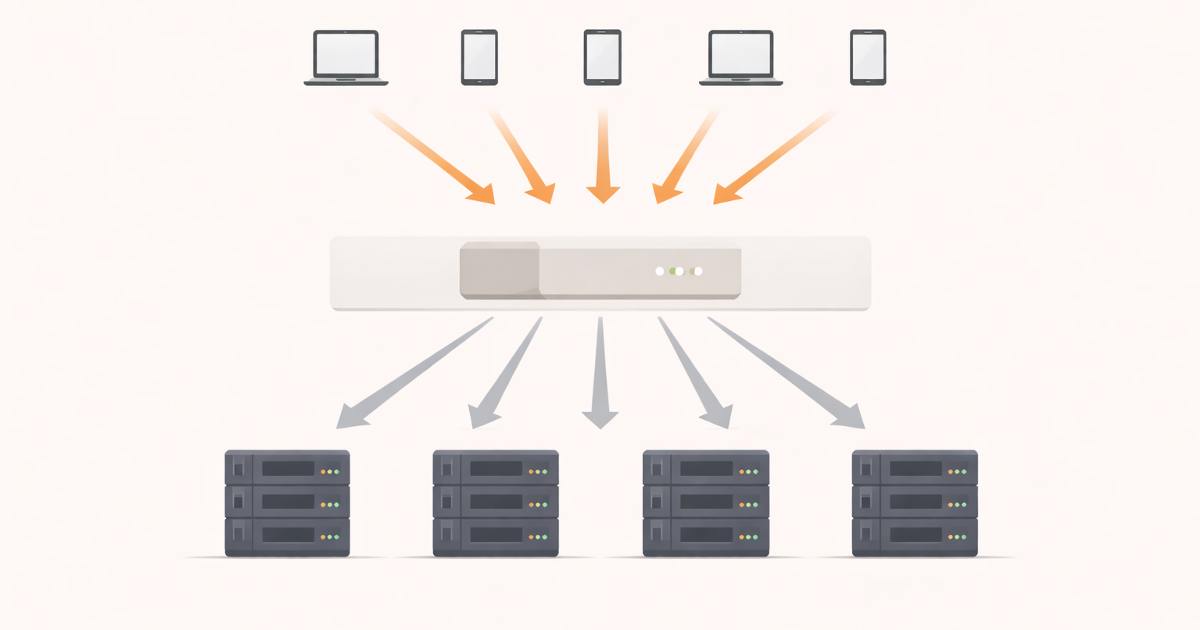
A reverse proxy:
- sits in front of servers
- receives requests from clients
- decides what happens next
To the client,
the reverse proxy is the system.
To the servers,
it’s a traffic manager and shield.
A Simple Story: The Reception Desk
Imagine a large office building.
Visitors don’t walk directly to employees.
They first stop at a reception desk.
The receptionist:
- checks who the visitor is
- decides where to send them
- blocks unauthorized access
- answers simple questions
Employees focus on actual work.
That reception desk is a reverse proxy.
What a Reverse Proxy Actually Does
A reverse proxy can:
- route requests to backend servers
- terminate SSL
- cache responses
- block malicious traffic
- hide internal architecture
flowchart LR
    Client --> RP[Reverse Proxy]
    RP --> LB[Load Balancer]
    LB --> S1[Server 1]
    LB --> S2[Server 2]
It centralizes cross-cutting concerns
that don’t belong in business logic.
How It’s Different from Load Balancing
This confusion is common.
- Load Balancer → decides which server
- Reverse Proxy → decides what happens to the request
They often live together.
Sometimes they are the same component.
But the intent is different.
⚠️ Common Trap
Trap: Putting business logic in the reverse proxy.
Reverse proxies are powerful,
but pushing application logic into them creates:
- tight coupling
- debugging nightmares
- hidden behavior
They should mediate — not decide business outcomes.
A Real Failure You’ve Probably Seen
Many large outages were not caused by backend crashes.
They were caused by:
- misconfigured proxies
- expired certificates
- bad routing rules
- cache poisoning
When the reverse proxy fails,
everything behind it becomes unreachable —
even if servers are healthy.
How This Connects to What We’ve Learned
Load Balancing
Reverse proxies often sit before or alongside load balancers.
https://vivekmolkar.com/posts/load-balancing/Client–Server Model
Clients talk to the proxy, not directly to servers.
https://vivekmolkar.com/posts/client-server-model/Single Point of Failure
A single reverse proxy can become a choke point if not replicated.
https://vivekmolkar.com/posts/single-point-of-failure/
Reverse proxies don’t add features.
They remove complexity from everything else.
🧪 Mini Exercise
Think about a system you know.
- Where does SSL terminate?
- Where does routing happen?
- Where would you block bad traffic today?
If all answers point to application code,
a reverse proxy is missing.
What’s Coming Next
Now that traffic is mediated and routed,
another question appears:
Why do some requests never reach the servers at all?
Next: Caching
How systems get faster by responding without working.