Stateless vs Stateful Systems (Why Memory Changes Everything)
A first-principles explanation of stateless and stateful systems, and how memory impacts scaling, failures, and reliability.
Why This Difference Matters
Your system is running fine.
Requests are flowing.
Users are active.
Everything feels stable.
Then one server restarts.
Suddenly:
- users are logged out
- carts are empty
- sessions are lost
Nothing “crashed”.
But something important disappeared: memory.
The Question We Rarely Ask
When a request reaches a server, there’s a quiet but critical question hiding underneath:
Does this server need to remember anything about the user?
The answer decides whether your system is stateful or stateless —
and it changes how your system behaves under failure and scale.
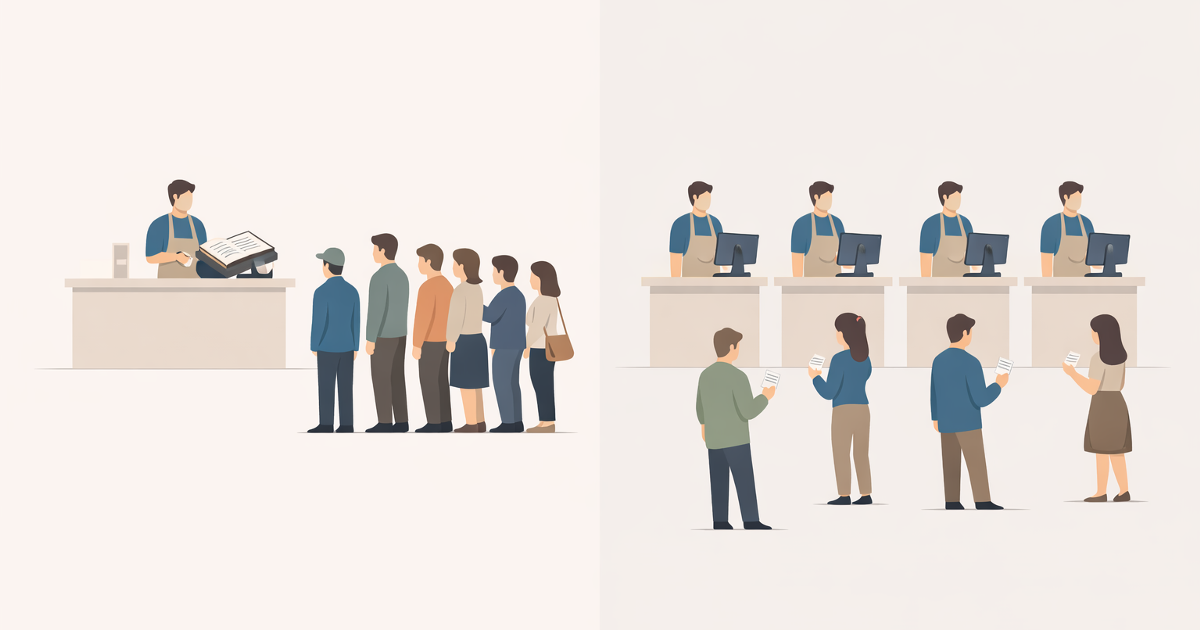
A Simple Story: The Notebook Counter
Imagine a small food counter.
Stateful Counter
The vendor keeps a notebook:
- remembers who ordered what
- tracks unpaid bills
- recognizes repeat customers
As long as the notebook is there, things work.
If the vendor leaves with the notebook,
everything stops.
Stateless Counter
Now imagine a different setup:
- every customer carries their own order slip
- the vendor only reads what’s handed over
If the vendor changes,
the counter keeps running.
Nothing important was tied to one person.
What Is a Stateful System?
A stateful system:
- remembers past interactions
- stores session data locally
- depends on memory between requests
flowchart LR
    User --> Server
    Server --> Memory[(Session Data)]
If that server fails or restarts,
the memory goes with it.
This makes stateful systems:
- easier to start with
- harder to scale
- fragile during failures
What Is a Stateless System?
A stateless system:
- treats every request as independent
- stores shared data outside the server
- does not rely on local memory
flowchart LR
    User --> Server
    Server --> Store[(Shared Store)]
Any server can handle any request.
This makes stateless systems:
- easier to scale horizontally
- resilient to restarts
- better suited for distributed systems
Where Systems Really Feel the Difference
Stateful systems struggle when:
- servers are added or removed
- load is distributed
- failures occur unexpectedly
Stateless systems shine because:
- requests can go anywhere
- failures are absorbed quietly
- scaling becomes predictable
This is why modern systems strongly prefer stateless designs wherever possible.
A Real Example You’ve Experienced
Think about logging into a website.
If you get logged out when:
- a server restarts
- traffic spikes
- requests are retried
The system is likely stateful.
If your session survives all of that,
the system was designed to be stateless.
Stateful systems remember users.
Stateless systems remember rules.
Memory makes systems convenient — and fragile.
🤔 Think About This
If one server disappears right now,
what user information disappears with it?
As Discussed Earlier in This Series
This idea connects directly to concepts we’ve already covered:
Why tying memory to one server makes failures catastrophic: Single point of failure
Why stateless systems scale out more naturally: Horizontal vs Vertical Scaling
Why adding speed doesn’t fix memory-bound designs: Scalability vs Performance
What’s Coming Next
Next, we zoom out and look at the foundation beneath all of this:
Client–Server Model
Who really does what — and why that separation matters.