Synchronous vs Asynchronous Systems (Why Waiting Is a Design Choice)
A calm, first-principles explanation of synchronous vs asynchronous systems, focusing on waiting, time, and system design trade-offs.
I Used to Think This Was Just About Speed
For a long time, I thought synchronous vs asynchronous was about performance.
One is “faster”.
The other is “more scalable”.
That framing felt neat.
It was also incomplete.
What I eventually realized is this:
This distinction is really about waiting.
Who waits.
For how long.
And what happens while they do.
A Small Moment That Changed My Understanding
I remember staring at an API call that looked harmless.
Client → Service → Database → Response.
Everything was “working”.
But the client was waiting.
Threads were blocked.
Retries were piling up.
Nothing had failed yet.
But the system felt… tense.
That’s when it clicked:
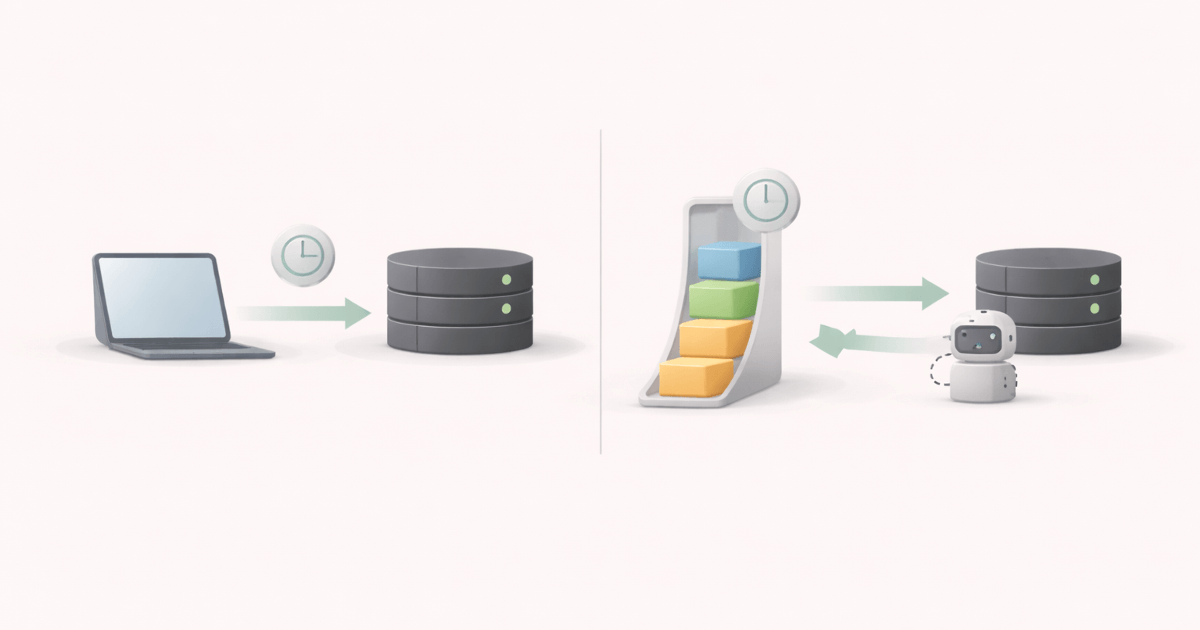
Synchronous systems make waiting visible.
Asynchronous systems try to relocate it.
What Synchronous Really Means (In Practice)
In a synchronous system:
- a request is sent
- the caller waits
- nothing else happens until a response comes back
It feels simple because it is.
Synchronous Flow
sequenceDiagram
    participant Client
    participant Service
    participant Database

    Client->>Service: Request
    Service->>Database: Query
    Database-->>Service: Result
    Service-->>Client: Response
During this time:
- the client is blocked
- threads are occupied
- failure propagates quickly
Synchronous systems assume:
“The thing I’m calling will respond soon.”
That assumption is fragile.
What Asynchronous Really Means (In Practice)
In an asynchronous system:
- work is handed off
- the caller moves on
- results arrive later (or elsewhere)
Nothing magical happens here.
We’re just changing who waits.
Asynchronous Flow
sequenceDiagram
    participant Client
    participant Service
    participant Queue
    participant Worker

    Client->>Service: Request
    Service->>Queue: Enqueue task
    Service-->>Client: Accepted

    Worker->>Queue: Poll task
    Worker->>Worker: Process work
Now:
- the client is free
- the system absorbs time
- waiting exists — but is controlled
Asynchronous systems assume:
“Waiting will happen. Let’s design where it lives.”
This Is Not About Choosing One
Early on, I tried to “pick a side”.
That was the wrong instinct.
Real systems are mixed.
- user-facing flows are often synchronous
- background work is asynchronous
- boundaries are intentional, not ideological
The real question is never:
“Sync or async?”
It is:
“Where can waiting safely exist?”
A Simple Mental Model
If a user is staring at a screen:
- synchronous feels honest
If work may take time:
- asynchronous feels respectful
Waiting isn’t bad.
Uncontrolled waiting is.
A Quiet Failure Mode
One of the most dangerous designs I’ve seen is:
- synchronous calls
- with asynchronous expectations
“We assume it’ll be quick.”
Until it isn’t.
That’s how:
- timeouts appear
- retries explode
- systems fail under normal load
How This Connects to What We’ve Learned
API contracts decide who waits
https://vivekmolkar.com/posts/api-design-contracts-over-code/Circuit breakers stop endless waiting
https://vivekmolkar.com/posts/circuit-breakers/Backpressure is waiting made explicit
https://vivekmolkar.com/posts/timeouts-retries-backpressure/Graceful degradation chooses what can wait
https://vivekmolkar.com/posts/graceful-degradation/
Time always exists in a system.
Design decides where it accumulates.
A Small Exercise
Think about a system you work on.
- Where do requests wait?
- Who feels the delay?
- What happens when waiting grows?
If you can answer that, you understand more than most diagrams show.
What Comes Next
Once systems stop waiting on each other directly…
How do they communicate without tight coupling?
Next: Event-Driven Architecture (When Time Matters)